
Introduction
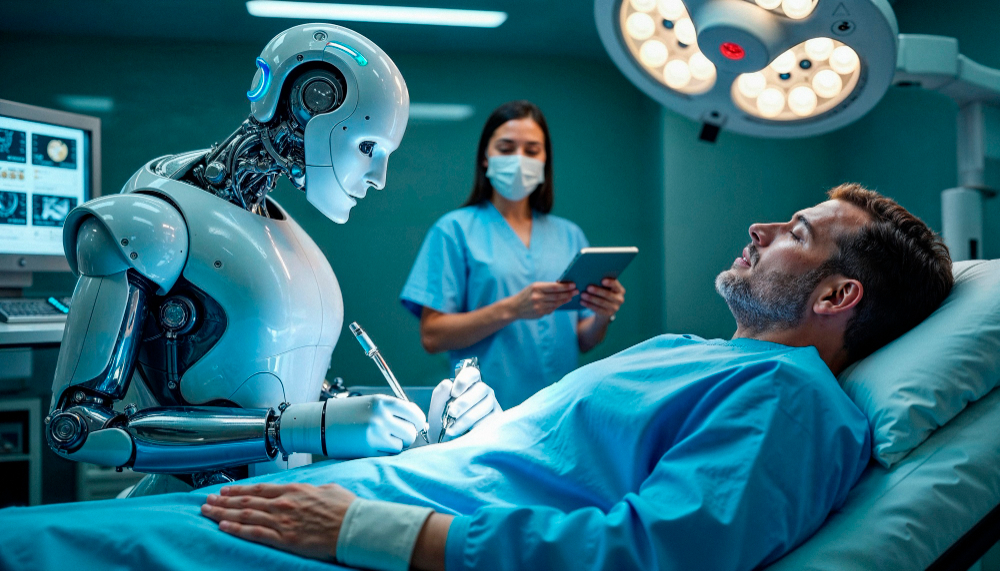
Hospitals are the beating heart of modern healthcare—but they are also complex ecosystems where timing, accuracy, and coordination can mean the difference between life and death. In 2025, Artificial Intelligence (AI) is emerging as one of the most powerful tools to improve patient safety, efficiency, and clinical outcomes. From preventing medical errors to optimizing hospital operations, AI is turning traditional hospitals into smart, data-driven environments that can save more lives.
1. Enhancing Diagnostic Accuracy
AI systems are increasingly being used to assist doctors in diagnosing diseases faster and more accurately.
- Medical Imaging: AI algorithms trained on thousands of CT scans, MRIs, and X-rays can detect abnormalities like tumors, fractures, or infections—sometimes earlier than human eyes.
- Pathology & Lab Analysis: AI-powered image recognition tools analyze tissue samples and blood tests, flagging suspicious patterns for pathologists.
- Clinical Decision Support: Machine-learning systems can cross-check symptoms and medical history to suggest potential diagnoses or treatment options.
By reducing human error and supporting clinicians with data-backed insights, AI helps ensure safer, more consistent care.
2. Predicting and Preventing Medical Emergencies
AI isn’t just reactive—it’s predictive. Smart algorithms analyze streams of patient data to anticipate complications before they occur.
- Early Warning Systems: AI models can monitor vital signs and alert staff to potential cardiac arrests, sepsis, or respiratory failure hours in advance.
- ICU Monitoring: Continuous monitoring powered by AI identifies subtle changes that could indicate a patient’s condition is deteriorating.
- Post-Surgical Risk Detection: Predictive tools help doctors assess which patients are most likely to face infections or readmissions, allowing early intervention.
These technologies act as a 24/7 digital safety net, catching risks before they escalate.
3. Streamlining Hospital Operations
Beyond clinical care, AI is optimizing how hospitals function behind the scenes.
- Smart Scheduling: AI tools help allocate staff, operating rooms, and resources efficiently—reducing patient wait times and doctor fatigue.
- Supply Chain Management: Predictive analytics ensure critical supplies like medications, PPE, and blood units are always available when needed.
- Bed and Capacity Management: AI can forecast patient admissions and discharge rates, helping hospitals balance workloads and prevent overcrowding.
The result? Hospitals that operate more smoothly, use resources wisely, and deliver better patient experiences.
4. Improving Patient Safety and Medication Accuracy
Medication errors are a leading cause of preventable harm in hospitals. AI helps tackle this issue through automation and intelligent checks.
- Automated Prescription Review: AI systems scan electronic prescriptions for potential drug interactions or dosage errors.
- Robotic Dispensing: Smart pharmacy robots use AI to accurately fill prescriptions and track inventory, minimizing human mistakes.
- Smart Infusion Pumps: AI-powered pumps automatically adjust medication dosages based on patient data in real time.
These innovations not only make medication delivery safer but also free healthcare workers to focus more on patient care.
5. Strengthening Cybersecurity and Data Protection
As hospitals become more digital, cybersecurity has become a critical aspect of patient safety.
AI-based security systems detect unusual network activity, identify potential data breaches, and isolate threats before they compromise sensitive information.
By continuously learning from new threats, AI enhances a hospital’s digital resilience—keeping both patients and their data safe.
6. Supporting Mental Health and Staff Well-Being
AI doesn’t just benefit patients—it’s helping healthcare workers too.
Smart scheduling and workload-balancing systems reduce burnout among nurses and physicians. Some hospitals are even piloting AI-driven mental health chatbots that provide emotional support or counseling resources for overworked staff.
A smarter hospital, in this sense, is also a more humane hospital.
7. The Future: Fully Connected Smart Hospitals
The next generation of hospitals will feature integrated AI ecosystems—connecting patient records, diagnostic devices, wearables, and robotic assistants into a seamless data network.
Imagine:
- Autonomous service robots delivering medications and disinfecting rooms.
- AI-driven triage systems in emergency departments prioritizing patients by severity.
- Digital twins of hospital operations that simulate resource needs in real time.
These advances will not replace doctors or nurses but will augment their expertise—creating hospitals that learn, adapt, and continuously improve.
Conclusion
AI is no longer a futuristic concept—it’s already transforming hospitals into smarter, safer, and more efficient spaces. By analyzing data, predicting risks, and automating critical processes, AI enhances both patient safety and staff effectiveness. The hospitals of tomorrow will not only treat illness but will anticipate and prevent it, ushering in a new era of intelligent, compassionate, and proactive healthcare.






Leave a Reply