Introduction
Imagine a future where no one dies waiting for a donor organ. Where instead of relying on scarce transplants, doctors could simply print a new liver, heart, or kidney—built from a patient’s own cells, perfectly matched and ready for implantation.
This is the promise of 3D bioprinting—a breakthrough technology that combines biology, engineering, and digital design to fabricate living tissues, and eventually, entire human organs.
Once a futuristic dream, 3D bioprinting is now advancing from lab prototypes to clinical reality, offering hope to millions suffering from organ failure.
1. The Organ Shortage Crisis
Every year, over 150,000 people worldwide are on organ transplant waiting lists. Yet only a fraction receive a match in time. Thousands die annually simply because there aren’t enough donors.
Even for those who do get a transplant, challenges remain:
- Rejection: The immune system often attacks donor organs.
- Lifelong medication: Patients must take immunosuppressants that weaken their immune systems.
- Ethical and logistical limits: Donor shortages and black-market risks persist globally.
3D bioprinting could eliminate these barriers entirely by creating organs on demand, using a patient’s own cells to prevent rejection.
2. What Is 3D Bioprinting?
At its core, 3D bioprinting is similar to traditional 3D printing—but instead of plastic or metal, it prints living cells and biomaterials.
Here’s how it works:
- Digital Blueprint: Scientists create a 3D digital model of the organ using medical imaging (MRI or CT scans).
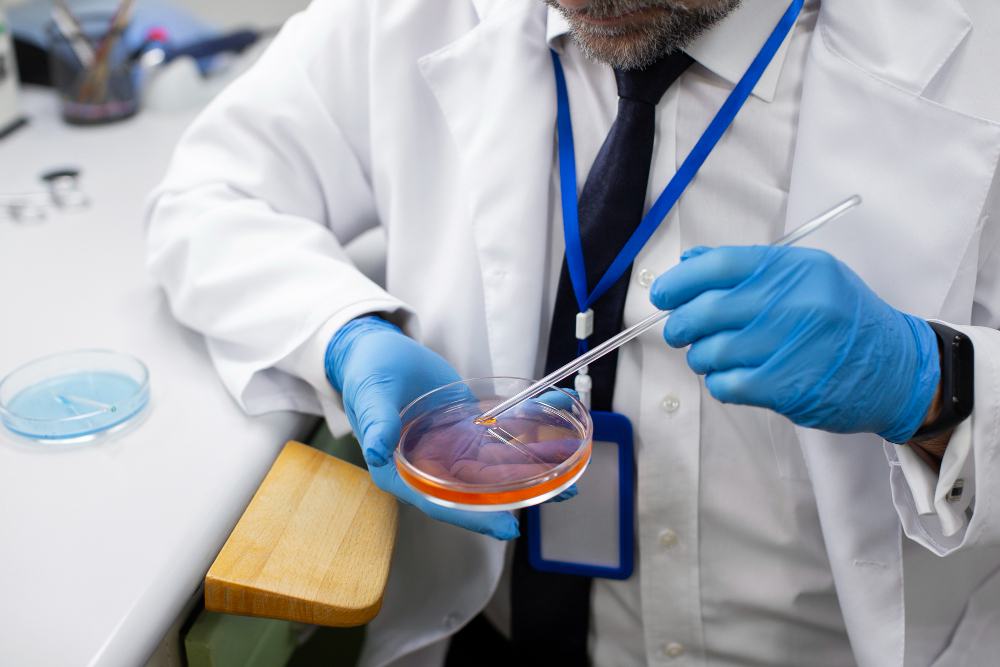
- Bioink Preparation: Cells (often stem cells) are combined with a gel-like substance called bioink that mimics the body’s natural environment.
- Layer-by-Layer Printing: Specialized printers deposit layers of bioink to form tissues, guided by computer precision.
- Maturation: The printed tissue is incubated in bioreactors where cells grow, fuse, and form functional structures.
This process enables the creation of everything from simple tissues like skin and cartilage to complex structures like blood vessels and mini-organs—known as organoids.
3. The Science of Printing Life
Bioprinting succeeds by combining multiple scientific disciplines:
- Stem Cell Biology: Using induced pluripotent stem cells (iPSCs), scientists can grow any cell type—from heart muscle to neurons.
- Material Science: Designing biocompatible scaffolds that mimic the body’s extracellular matrix.
- Computer-Aided Design (CAD): Digital modeling allows precise replication of organ anatomy.
- Tissue Engineering: Integration of printed cells, nutrients, and oxygen ensures the tissue stays alive and functional.
Each breakthrough in these fields brings us one step closer to printing fully functional, transplantable organs.
4. Breakthroughs on the Path to Printable Organs
a. Skin and Tissue Repair
Bioprinting of skin grafts for burn victims is already in clinical trials.
- Researchers can print multi-layered skin containing both dermis and epidermis.
- The U.S. Army and companies like 3D Systems are developing portable bioprinters for use on the battlefield.
b. Bone and Cartilage
Bioprinted bone scaffolds can regenerate damaged skeletal tissue.
- The company Osteopore has successfully implanted 3D-printed bone scaffolds that dissolve as natural bone regrows.
- Cartilage for joints and nose reconstruction has already been tested on humans.
c. Mini-Organs and Organoids
Labs around the world have printed mini livers, kidneys, and heart tissues that function for weeks in vitro.
- Organovo, a pioneer in the field, has printed liver tissue used to test drug toxicity.
- Researchers at Tel Aviv University printed a small, vascularized heart using human cells—an extraordinary proof of concept.
d. Toward Full Organ Printing
The next milestone is printing complete, vascularized organs—with blood vessels, nerves, and functional tissue layers.
Breakthroughs in microfluidics and biofabrication are bringing this goal closer each year.
5. Advantages Over Traditional Transplants
3D bioprinting could revolutionize organ transplantation in multiple ways:
- Personalized organs: Built from the patient’s own cells, eliminating rejection.
- Unlimited supply: No need to rely on donors.
- Faster recovery: Biocompatibility reduces complications.
- Drug testing: Lab-grown human tissues allow safer, more accurate preclinical trials—potentially replacing animal testing.
In short, bioprinting transforms organ replacement from a scarce resource into a manufacturing process.
6. Challenges on the Road Ahead
Despite incredible progress, several obstacles remain:
- Vascularization: Creating networks of blood vessels to keep large tissues alive.
- Complexity: Replicating organs like the liver or brain requires integrating dozens of cell types.
- Regulation: Ensuring printed tissues meet medical safety standards.
- Cost and scalability: Current printers and bioinks are expensive and not yet mass-producible.
- Ethical questions: As we grow human tissues in labs, issues of consent, identity, and bioethics arise.
Still, as one scientist put it: “The first airplane didn’t cross the Atlantic—but it proved flight was possible.”
7. The Future: Printing the Human Body
By 2035, experts predict that bioprinted organs could begin entering clinical use, starting with simpler tissues like skin, cartilage, and kidneys.
Some researchers envision hospitals with on-site bioprinting labs, where a patient’s cells are harvested, processed, and printed into replacement tissues—all within days.
Imagine a world where:
- Burn victims receive instant printed skin.
- Heart disease patients receive new tissue patches instead of transplants.
- Organ shortages are eliminated forever.
In this world, organ donation may become obsolete, replaced by a sustainable, regenerative model of healthcare.
Conclusion
3D bioprinting stands at the intersection of technology, biology, and hope. It represents humanity’s boldest attempt to master life itself—not by replacing nature, but by learning from it.
While fully printed human organs are still in development, each new breakthrough brings the dream closer to reality. One day soon, when a patient needs a new heart or liver, the question won’t be “Can we find a donor?”—it will be “When can we print one?”
The future of organ transplantation may not be about donation—it may be about creation.







Leave a Reply