
Introduction
In medicine, timing is everything. Detecting a disease early can mean the difference between full recovery and lifelong complications—or even life and death. Thanks to rapid advancements in machine learning (ML), doctors are now able to identify diseases before symptoms become severe, sometimes even before they appear at all.
Machine learning—a branch of artificial intelligence—allows computers to learn from vast amounts of medical data, uncovering subtle patterns that human eyes might miss. In 2025, it’s emerging as one of the most powerful allies in the fight against cancer, heart disease, diabetes, and countless other conditions.
1. What Is Machine Learning in Healthcare?
Machine learning (ML) involves training computer algorithms to recognize patterns in data. In healthcare, this data comes from:
- Medical images (CT scans, MRIs, X-rays)
- Genomic data (DNA sequences)
- Electronic health records (EHRs)
- Wearable and sensor data (heart rate, blood oxygen, glucose levels)
By analyzing these massive datasets, ML systems can identify early indicators of disease and predict who is most at risk—often long before traditional methods would detect a problem.
2. Why Early Detection Matters
Early detection saves lives and reduces healthcare costs. For example:
- Cancer: When caught in stage I instead of stage IV, survival rates can increase by up to 90%.
- Diabetes: Early detection allows lifestyle intervention before irreversible complications occur.
- Cardiovascular disease: Identifying early arterial damage can prevent strokes and heart attacks.
Machine learning enhances early detection by identifying subtle, preclinical signs that doctors may not see on their own.
3. How Machine Learning Detects Diseases Early
a. Image Recognition in Radiology and Pathology
ML algorithms can analyze thousands of medical images to identify microscopic abnormalities.
- Radiology: Tools like Google’s DeepMind and Aidoc detect signs of cancer, pneumonia, or stroke from X-rays and CT scans faster than human experts.
- Pathology: Systems like PathAI assist pathologists in spotting early-stage tumors or cellular changes indicative of disease.
These models learn from millions of labeled examples—each scan helping the AI become more accurate over time.
b. Predictive Analytics in Electronic Health Records
Hospitals are using ML to analyze years of patient data to forecast disease risk.
- Algorithms can predict the likelihood of conditions like sepsis, heart failure, or chronic kidney disease days before symptoms appear.
- Epic Systems and Cerner have developed ML-powered modules that send alerts to doctors when a patient’s data shows concerning trends.
c. Genomic and Molecular Data Analysis
In genomics, ML is helping decode genetic risk factors for complex diseases.
- It identifies mutations linked to cancers or inherited conditions.
- It powers precision medicine, where treatments are tailored based on an individual’s DNA.
d. Wearables and Continuous Monitoring
Smartwatches and health bands equipped with ML can track heart rate variability, sleep patterns, and oxygen levels to spot early signs of problems.
For instance, ML algorithms can flag irregular heart rhythms, detect sleep apnea, or predict stress-related disorders before they escalate.
4. Real-World Success Stories
- Breast Cancer: Google Health’s ML system outperformed radiologists in detecting breast cancer in mammograms, reducing false negatives by 9%.
- Diabetic Retinopathy: AI systems such as IDx-DR can screen for diabetic eye disease from retinal photos—without a human specialist.
- Alzheimer’s Prediction: ML models analyzing brain scans and genetic markers can identify Alzheimer’s years before symptoms appear, enabling preventive strategies.
- Sepsis Detection: Hospitals using ML-based early-warning systems have reduced sepsis mortality by up to 20%.
These examples show how machine learning is becoming a lifesaving diagnostic companion across medical disciplines.
5. Challenges and Limitations
While promising, machine learning in early disease detection faces key challenges:
- Data quality and bias: ML models are only as good as the data they’re trained on. Incomplete or biased datasets can lead to unequal outcomes across demographics.
- Explainability: Doctors must understand why an algorithm makes a prediction—black-box models can reduce trust and hinder adoption.
- Regulation and validation: Medical AI tools must meet strict clinical and ethical standards before deployment.
- Integration: Hospitals need compatible infrastructure to merge AI systems with existing workflows and EHRs.
Ethical AI frameworks and interdisciplinary collaboration will be crucial to overcome these hurdles.
6. The Future of Machine Learning in Medicine
The next generation of ML systems will go beyond detection—they’ll be predictive, personalized, and preventive. Expect to see:
- Digital twins: Virtual models of individual patients to simulate disease progression and treatment outcomes.
- Federated learning: Secure sharing of medical insights across hospitals without compromising patient privacy.
- Multimodal AI: Systems that combine genetics, imaging, and lifestyle data for a holistic view of health.
- Continuous learning algorithms: ML models that improve in real time as new data is collected.
These innovations are driving medicine toward a proactive, precision-based future, where disease prevention becomes as data-driven as diagnosis.
Conclusion
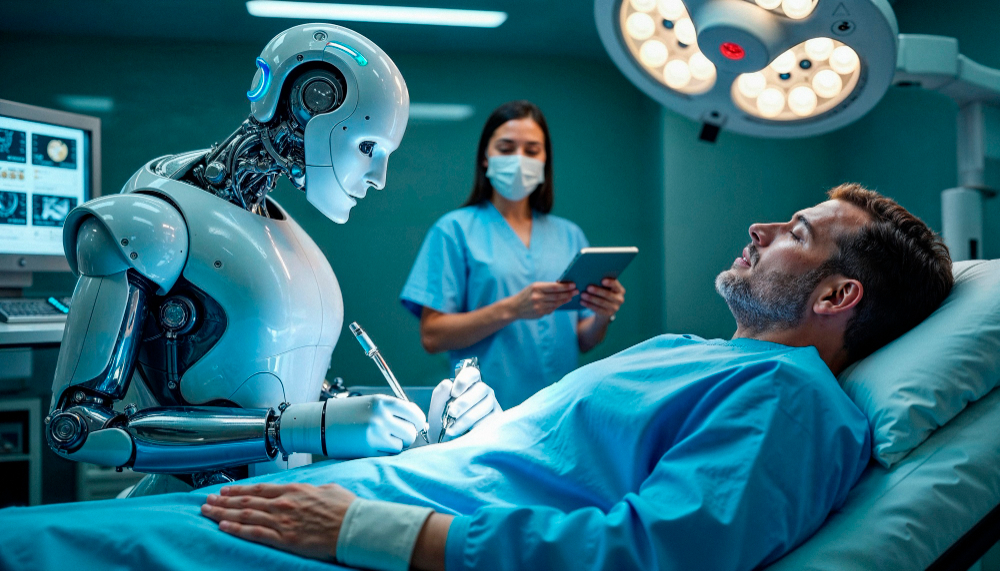
Machine learning is revolutionizing early disease detection by transforming vast amounts of medical data into actionable insights. From reading X-rays to decoding DNA, ML helps doctors catch diseases at their earliest—and most treatable—stages.
While it’s not replacing human expertise, it’s augmenting it—making clinicians faster, more accurate, and better equipped to save lives.
In the years ahead, the combination of human empathy and machine intelligence will redefine healthcare—not just treating illness, but preventing it before it starts.
Would you like me to rework this article into a feature-style magazine piece (with storytelling and expert commentary) or an SEO-optimized blog post (using keywords like “AI in early diagnosis,” “machine learning in healthcare,” and “predictive medicine”)?
ChatGPT can make mistakes. Check important






Leave a Reply